


Introduction: How AI and Immunotherapy Are Transforming Cancer Treatment
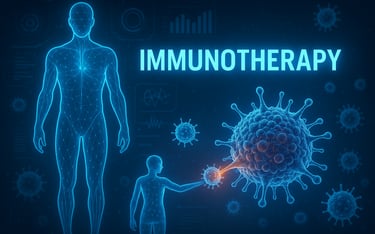
Oncology is now in a revolution era with technological innovations of immuno-therapeutics, artificial-intelligence-enhanced diagnostics, new vaccine platforms, and precision oncology regimens. In the United States, cancer cells still set the standards of active research and clinical facilities are quickly adopting AI code to enhance the accuracy of diagnosis, tailor treatment protocols, and reduce the translational cascade.
The greatest current innovations are one that brings together two strong forces:
✔ Immunotherapy (fighting against cancer by the immunity of the body)
✔ Artificial Intelligence (prediction, optimization and customization of cancer care)
Starting with AI-improved checkpoint blockers all the way to the next-generation CAR-T treatments, the article outlines the key oncologic breakthroughs, which are at the forefront of the modern-day discussions and are of significant interest among both lay and professional U.S. audiences.
⭐ Why Immunotherapy Is taking over cancer therapy:-
The current immunotherapy constitutes one of the most effective and desirable modalities in the oncologic practice in the United States due to the following characteristics:
Delivers precisely to the cancer cells using tumor specific antigens.
- has fewer side effects compared to the traditional cytotoxic chemotherapy.
- Enhances remission possibility in long-term in a type of patient.
- Shows both efficacy in the advanced and previously untreatable malignancies.
There was a significant breakthrough at the AI-Optimized Checkpoint Inhibitors (PD -1, PD -L1, CTLA -4) level.
The invention of checkpoint inhibitors was the initial great achievement in immunotherapy. Newer applications of AI continue to advance their growth and implementation in the medical field in 2025.
🔬 The Physician Checkpoint Therapy Is changing:-
- predicts responders to therapy AI models decompose the tumor biomarker signature, changes in the genome, and immune infiltrate measures.
- Enhances targeted drug delivery: Machine-learning discovery of novel immune pathways which could be therapeutically targeted.
- Maximizes treatment responses: AI can use real-time measurements of tumor reign to perform some form of optimization of dosing or combination.
- Minimizes trial failures: Predictive modeling steps up FDA approval of safer and more effective agents.
Favorable responses in the USA:
Melanoma, Non-Small cell lung cancer, Renal cell carcinoma, Head and neck cancer, Triple-negative breast cancer.
CAR-T cell therapy continues to be one of the most radical treatments in cancer therapy. Sequential cycles of advancement in 2025 are already underway to overcome some of the previous constraints, and AI design is in support of this direction.
🔥 What’s New in CAR‑T Therapy?
✔ Off Shelf CAR -T (Allogeneic CAR -T) - quick, cost-effective, mass-produced cells.
✔ AI-based CAR-T receptors - increase paid specificity and minimal off-target toxicity.
✔ CAR-T in solid tumors CAR-T - has made great strides against pancreatic, ovarian, colorectal, and brain cancer.
✔ CRISPR- surgeons have Created :- CAR-T -genes-edited constructions to improve immune activation.
The clinical trials conducted at U.S. cancer centers that show the promising benefits of survival are MD Anderson, Mayo Clinic, Cleveland Clinic, and Memorial Sloan Kettering.
⭐Breakthrough: AI-empowered personalized cancer vaccines/mRNA and Neoantigen Vaccines:-
The development of personalized vaccine approaches is an interesting area of Oncology therapy, which teaches the immune system to respond to tumor mutations.
🚀Air space vehicles are currently under development, and while they are currently used, they are slowly being replaced by jet engines in aircraft.<|human|>How Personalized Cancer Vaccines Work:
- Pipeline analysis is done on the tumor genome using AI.
- AI is able to determine neoantigens unique to the neoplasm of an individual patient.
- A tailor made vaccine is produced by mRNA technology.
- Immuno-surveillance cells are programmed to eliminate doubled cells.
2025 U.S. Results:
Melanoma recurrence minimized by 50%.
Effective immune response in pancreatic and lung cancer.
Generative AI technology can be used to produce vaccines faster.
The leading vaccine race in the world is by companies like Moderna, BioNTech and Gritstone Bio.
⭐Strategy: Liquid Biopsy + AI equals An Early Cancer Detection Revolution:-
One of the most asked technologies is liquid biopsy. Its accuracy of diagnosis is improved by the use of AI.
What AI-enhanced liquid biopsy picks up:
- Circulating tumor DNA (ctDNA)
- Low disease residual (MRD)
- Pregnant oncogenic symptoms before clinical symptoms.
- Recurrence risk indicators
Why This Matters to U.S. Users:
Early-stage cancer leads to a significant enhancement in survival particularly in the cases of breast, colorectal and lung cancer.
Grailed, Exact Sciences and Natera are some of the companies that dominate the U.S market.
⭐ Breakthrough : AI Radiomics & Smart Imaging Systems
AI-driven imaging tools are helping radiologists detect cancer earlier and more accurately than ever.
Benefits:
- Identifies tumors that can not be seen with the eyes.
- Makes use of imaging phenotypes in prediction of tumor aggressiveness.
- The personalized treatment plan is supported.
- Enhances the accuracy in diagnostics of mammography scans or CT/MRI scans.
Google Health, IBM Watson Health, and Siemens AI Imaging have deep-learning radiology applications that are prolifically used in the hospitals of the U.S.
⭐ Breakthrough #6: Digital Twins for Immune System Simulation
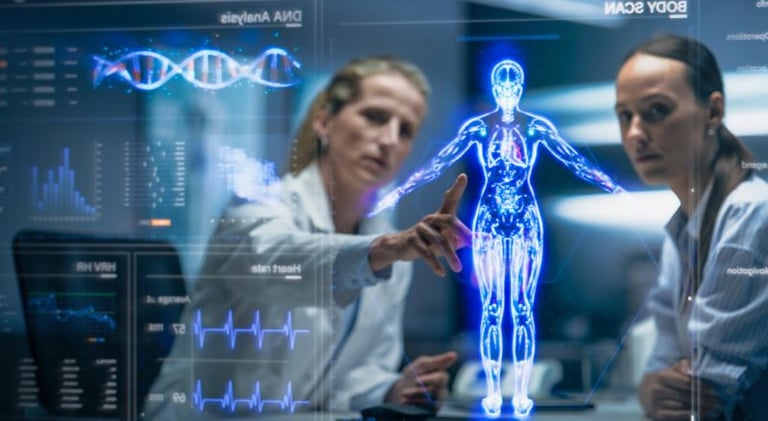
AI-driven “digital twin” technology creates a virtual replica of a patient’s immune system.
What Digital Twins Can Do:
- Hypersimplify results of treatment.
- Determine the best combinations of immunotherapy.
- Minimize side effects.
- Individualize dispensatory routes.
Some of the U.S. institutions that use the models of digital twins are:
Mayo Clinic, Stanford Medicine, Johns Hopkins.
⭐ Breakthrough #7: Tumor Microenvironment Targeting
AI helps researchers understand and manipulate the tumor microenvironment (TME)—a major factor in cancer progression
Advancements:
- T -cell infiltration-enhancing agents.
- Mitigating therapies against tumor immune evasion.
- UME Breathless, TME combination regimens.
Recent success especially in pancreatic, ovarian, hepatic and colorectal cancers.
by definition, this field of study is known to have been successfully applied to medicine in the field of immunotherapy.
⭐ Breakthrough #8: AI-Driven Drug Discovery for Immunotherapy
AI is reducing the drug discovery timeline from 10+ years to under 3 years.
AI can now:
Design immunotherapy molecules
Predict drug toxicity
Optimize dosage
Identify new therapeutic targets
Companies leading the field:
Insilico Medicine
Recursion
DeepMind
Tempus
NVIDIA BioNeMo
⭐ Impact on Patients: Why These Breakthroughs Matter
These advancements provide:
✔ Earlier cancer detection
✔ More effective treatment options
✔ Fewer side effects
✔ Reduced relapse rates
✔ Personalized medicine
✔ Longer survival
For American patients, access to advanced clinical trials and AI-driven diagnostics means better outcomes and faster treatment decisi⭐ Future Outlook: What’s Coming Next in Cancer Treatment?
In the next decade, oncology will move toward:
Universal cancer vaccines
Fully personalized immunotherapy
AI-guided clinical decision-making
Real-time immune monitoring with wearables
Preventive oncology powered by genetic AI models
Cancer treatment will become more accurate, more personalized, and far more effective.
⭐ Conclusion
Innovation of immunotherapy and advancement of AI are transforming both the international and domestic scenery of cancer care. In 2025, personalized vaccines and AI-designed therapeutics are among the unprecedented possibilities with promises that have never been seen before. To the U.S. readers who may want to know the very recent advances, these inventions bring about the next ground-breaking improvement in the treatment of cancer, which would be safer, smarter, and more successful.